6 battery technologies powering EVs into a new era of transportation
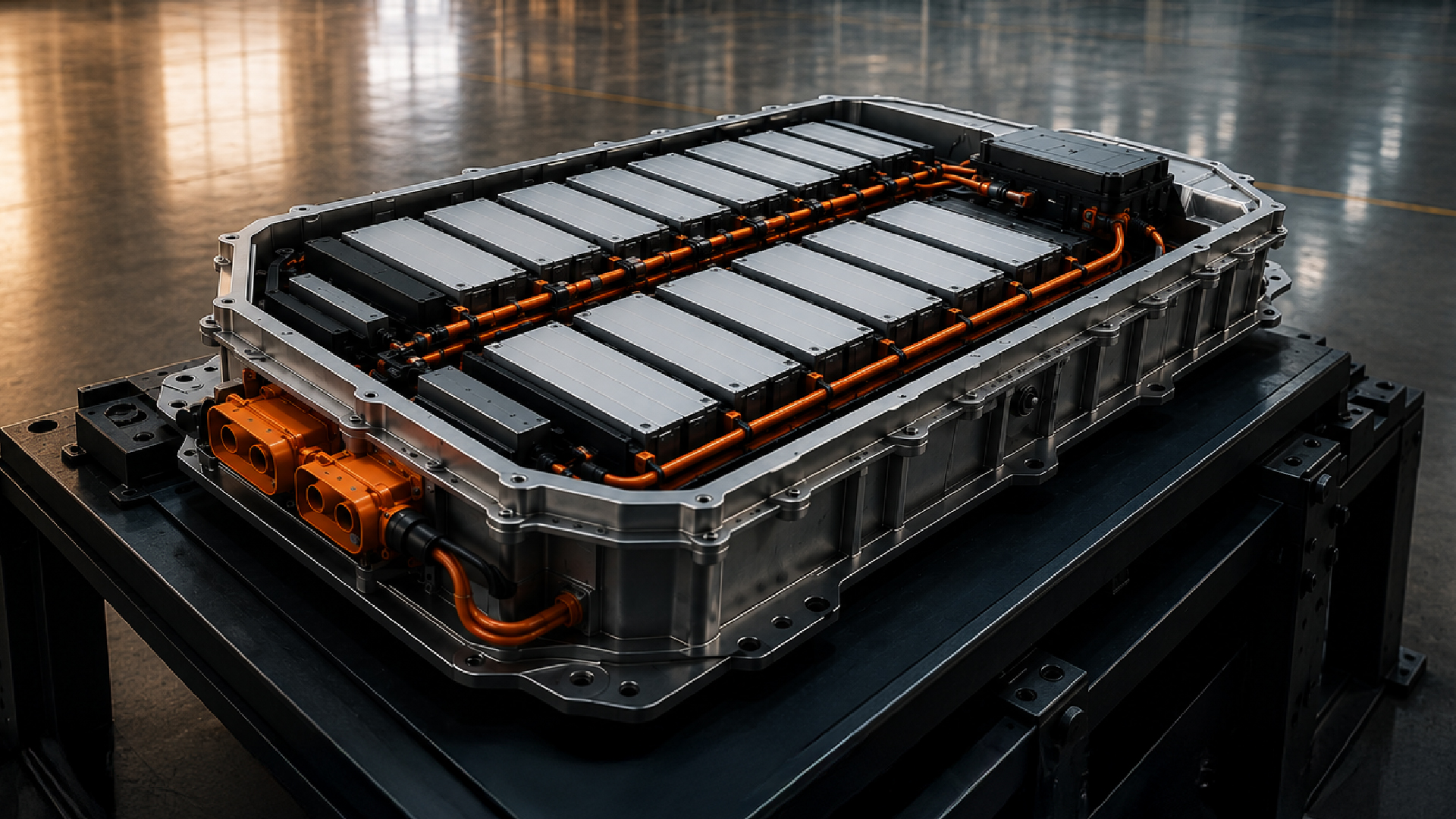
Not all EVs are the same. Here are the six battery types shaping the industry.
Battery technology sits at the heart of every electric vehicle, and the choices being made today will define performance, cost, and sustainability for the next decade.
There is no single "perfect" battery. Each chemistry comes with its own strengths, trade-offs, and backstory.
Here are six battery technologies helping shape the next chapter of electric mobility.
1. Lithium Iron Phosphate (LFP)
LFP has become one of the most widely adopted battery chemistries in recent years. It delivers excellent safety, a long lifespan, and lower costs by completely avoiding nickel and cobalt.
What makes it particularly interesting is its exceptional thermal stability. LFP cells are famously difficult to set on fire. In demonstrations, they have been nailed, crushed, and even drilled through without catastrophic failure. This safety profile has made them especially popular for mass-market vehicles and commercial fleets.
Pros: Outstanding thermal stability (very hard to overheat or catch fire), long cycle life, lower cost, and reduced reliance on critical minerals. Also, LFP batteries can be regularly charged to 100% with little impact on long-term battery health.
Cons: Lower energy density, which usually means shorter range for the same battery size.
Who's driving it?
BYD built much of its success on its Blade Battery, an LFP design that powers models such as the Dolphin, Seal, and Atto 3.
Tesla also uses LFP batteries in standard-range versions of the Model 3 and Model Y in many markets, while the MG4 and Dacia Spring also rely on this chemistry.
2. Nickel Manganese Cobalt (NMC)
NMC remains the preferred chemistry when higher energy density and longer range are priorities. By carefully balancing nickel, manganese, and cobalt, manufacturers achieve strong performance while maintaining good stability and manageable costs.
One of its biggest advantages is flexibility. Different ratios, such as high-nickel NMC811, allow engineers to increase energy density while gradually reducing reliance on expensive cobalt. Rather than being one fixed formula, NMC can be tuned to suit different vehicle requirements.
This balance of high energy density, performance, and maturity has made NMC the battery of choice for many long-range electric vehicles, particularly in the premium market.
Pros: High energy density for longer range, good power delivery, and proven scalability.
Cons: Higher cost and some reliance on cobalt (though this is being actively reduced).
Who's driving it?
NMC powers long-range versions of the Tesla Model 3 and Tesla Model Y, along with vehicles including the KIA EV6, Kia EV9, Hyundai Ioniq 5, Hyundai Ioniq 6, BMW i4, BMW iX, Porsche Taycan, and several Polestar models.
3. Solid-state batteries
Solid-state batteries replace the flammable liquid electrolyte found in conventional lithium-ion cells with a solid material. This fundamental change unlocks the potential for higher energy density, much faster charging, longer battery life, and significantly improved safety.
The technology has been researched for decades, but recent advances in materials science have brought it much closer to commercial reality. Think of it as moving from a liquid-filled battery to something more like a solid ceramic structure that is inherently more stable and capable of storing more energy.
Pros: Potentially much higher energy density, faster charging, better safety (lower fire risk), and longer lifespan.
Cons: Manufacturing at scale remains challenging and currently more expensive.
Who's driving it?
QuantumScape is one of the best-known developers, backed by Volkswagen.
Other major manufacturers, including Toyota, Mercedes-Benz, Stellantis, Chery, and NIO, are also investing heavily in solid-state development, with some targeting production later this decade.
4. Sodium-ion batteries
Sodium-ion batteries use sodium instead of lithium as the charge carrier. Since sodium is one of the most abundant elements on Earth, this chemistry offers a promising route to lower costs and more resilient supply chains.
Another advantage is its performance in cold climates, where sodium-ion batteries retain more of their capacity than many lithium-ion batteries, making them particularly attractive for regions with harsh winters.
Interestingly, sodium-ion technology dates back to the early days of rechargeable battery research in the 1970s and 1980s, alongside lithium-ion. Lithium eventually became the dominant technology because it offered higher energy density, but sodium is now making a comeback as manufacturers search for more affordable alternatives.
Pros: Lower cost, excellent supply chain resilience, and strong low-temperature performance.
Cons: Currently lower energy density than top lithium-ion chemistries, making it better suited for shorter-range or cost-focused applications.
Who's driving it?
CATL has commercialised sodium-ion technology, with early deployment in vehicles such as the Changan Nevo A06.
BYD is also investing in dedicated sodium-ion production capacity.
5. Silicon-anode batteries
Most lithium-ion batteries use graphite anodes. Silicon, however, can theoretically store up to ten times more lithium ions, offering the potential for significantly greater energy density and much faster charging.
The challenge has always been expansion. Silicon swells dramatically as it charges, rather like a sponge absorbing water, which can damage the battery over time.
Recent advances in nano-engineered silicon materials are helping solve this problem, making silicon-anode batteries one of the most promising ways to improve today's lithium-ion batteries without replacing the entire technology.
Pros: Significantly higher energy density and faster charging potential while working with existing production lines.
Cons: Silicon expands during charging, so durability and cycle life require advanced material engineering to manage.
Who's driving it?
Group14 Technologies is one of the leading developers of commercial silicon-anode materials, with backing from Porsche. Its technology is already being integrated into batteries supplied to global vehicle manufacturers.
6. Lithium Manganese Iron Phosphate (LMFP)
LMFP can be thought of as the next evolution of LFP.
By introducing manganese into the chemistry, manufacturers can increase energy density by around 10% while retaining much of LFP's safety, long lifespan, and cost advantages.
Rather than reinventing the battery, LMFP builds on an already successful chemistry to deliver improved range without the higher costs associated with nickel-rich batteries. This could allow manufacturers to offer longer-range vehicles without moving to more expensive nickel-rich battery chemistries.
Pros: Better energy density than standard LFP (more range) while retaining strong safety and affordability.
Cons: Still relatively new in full commercial rollout, with some performance tuning still underway.
Who's driving it?
CATL is leading development and early commercialisation of LMFP, sometimes referred to as M3P, positioning it as the next generation of affordable, high-performance batteries.
There won't be one winner
The future of electric vehicles will not be powered by a single battery technology.
LFP and sodium-ion batteries will continue making electric mobility more affordable. NMC and solid-state batteries will drive higher performance and longer range. Silicon anodes and LMFP will improve the batteries already powering millions of vehicles.
Battery innovation isn't about finding one ultimate solution. It's about choosing the right technology for the right application. That's what will power the next generation of eMobility.
How Nexxt Industry supports the eMobility sector
For companies operating in autonomous driving, connected mobility, and eMobility, building great technology is only part of the challenge. Building market authority is what turns innovation into growth.
At Nexxt Industry, we help B2B tech companies build visibility, trust, and authority in fast-moving markets. Want to see how your brand performs today? Take the Market Authority Index test and discover your score.
For more industry insights and conversations, listen to our podcast and follow Nexxt Industry on LinkedIn to stay up to date with new articles, market trends, and eMobility news.